
From Wand Toys to Screens: What Counts as “Real” Enrichment for Cats?
A practical guide to feline enrichment—wand play, puzzles, environment upgrades, and screen-based prey games—with safety tips and a decision tree by life stage.
1) What “real” enrichment means: instincts, choice, and a complete play cycle
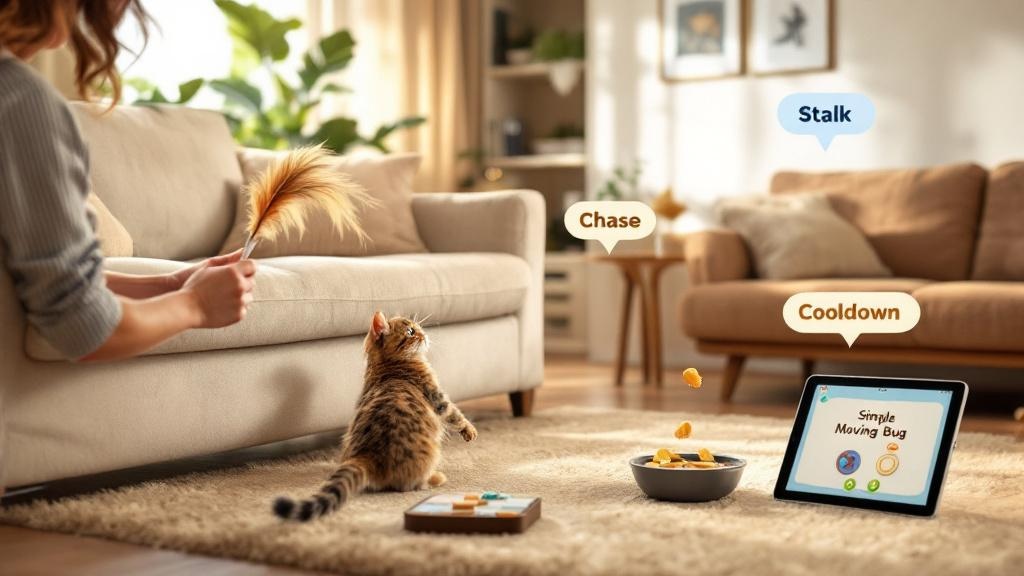
Cat enrichment isn’t defined by the tool—it’s defined by what it does for feline welfare. “Real” enrichment supports natural instincts (stalk, chase, pounce, pause), offers choice and control, and fits the cat’s body and brain. In practical terms, good interactive play and enrichment should create engagement without tipping into frustration or overstimulation. That’s why cat enrichment is more than “exercise”: it’s stress relief, confidence building, and a way to prevent boredom behaviors like midnight zoomies, destructive scratching, and inter-cat tension.
A helpful lens is the play cycle: hunt → chase → capture → cooldown → rest. Wand toys often excel at “capture” because you can let the cat “win.” Puzzle feeders support the foraging side and extend mental effort. Environmental changes (vertical space, hiding spots, window perches) reduce baseline stress and give cats safe outlets. Screen-based prey games can also count as enrichment when they’re designed with feline behavior in mind—short sessions, clear endpoints, and routines that translate into calmer daily life (a major goal in pettech behavior guidance).
2) Modalities compared: wand toys, puzzles, environment upgrades, and screen play (with safety guardrails)
Each modality solves a different piece of the enrichment puzzle. Interactive play (wand toys, chase games with you) is the gold standard for relationship building and controlled “prey completion”—you can slow down, change direction, and let your cat catch. Solo puzzle feeders and treat balls shine when you’re busy: they stretch foraging time, reduce scarf-and-barf, and add daily mental work. Environmental enrichment (cat trees, shelves, scent trails, cardboard “caves,” bird-safe window viewing) raises baseline wellbeing for multi-cat homes by increasing space and reducing conflict.
Screen-based prey games are the most debated. They can be excellent for short bursts—especially for indoor cats—because they trigger visual tracking and quick pounces. Concerns are real: some cats get overstimulated, some lose interest fast, and screens can’t fully replace tactile capture. The fix is structure and safety: keep sessions 3–10 minutes, end on a calm note, and add a “cooldown” routine (treat scatter, lick mat, or wand toy for a final catch). A cat-first mobilegaming approach—timers, auto-pause, and simple analytics—helps owners turn novelty into repeatable cat enrichment habits instead of endless, frantic swiping.
3) A practical decision tree (kittens, seniors, high-drive cats) + building a sustainable routine
Use this quick decision tree to choose the right mix. Kittens (high energy, short attention): prioritize frequent micro-sessions—2–5 minutes of interactive play, then a tiny food reward. Rotate puzzles for variety, and keep screen play brief so arousal doesn’t spike. Seniors (lower stamina, joints): favor gentle wand work close to the ground, slow puzzles, and environmental comfort (warm beds, easy ramps). Screen prey can be useful if movement is adjustable and sessions stay short.
High-drive cats (intense chasers, easily frustrated): schedule predictable outlets—two daily sessions with clear endings. Start with wand play to ensure “capture,” then optionally add 3–5 minutes of screen-based prey as a sprint, followed by a cooldown (snuffle mat, treat scatter, or calm petting if they enjoy it). Multi-cat households benefit from individual pacing: one cat may need speed and challenge while another needs slower targets and more breaks.
The goal is consistency, not perfection. A subscription-style routine builder with lightweight personalization and analytics (preferred prey type, best time-of-day) can translate behavior guidance into an easy plan: “5 minutes before meetings,” “7pm reminder,” and “done for now” guardrails. That’s where pettech can make enrichment feel doable—and where cats feel better, day after day.
1) What “real” enrichment means: instincts, choice, and a complete play cycle
Cat enrichment isn’t defined by the tool—it’s defined by what it does for feline welfare. “Real” enrichment supports natural instincts (stalk, chase, pounce, pause), offers choice and control, and fits the cat’s body and brain. In practical terms, good interactive play and enrichment should create engagement without tipping into frustration or overstimulation. That’s why cat enrichment is more than “exercise”: it’s stress relief, confidence building, and a way to prevent boredom behaviors like midnight zoomies, destructive scratching, and inter-cat tension.
A helpful lens is the play cycle: hunt → chase → capture → cooldown → rest. Wand toys often excel at “capture” because you can let the cat “win.” Puzzle feeders support the foraging side and extend mental effort. Environmental changes (vertical space, hiding spots, window perches) reduce baseline stress and give cats safe outlets. Screen-based prey games can also count as enrichment when they’re designed with feline behavior in mind—short sessions, clear endpoints, and routines that translate into calmer daily life (a major goal in pettech behavior guidance).
2) Modalities compared: wand toys, puzzles, environment upgrades, and screen play (with safety guardrails)
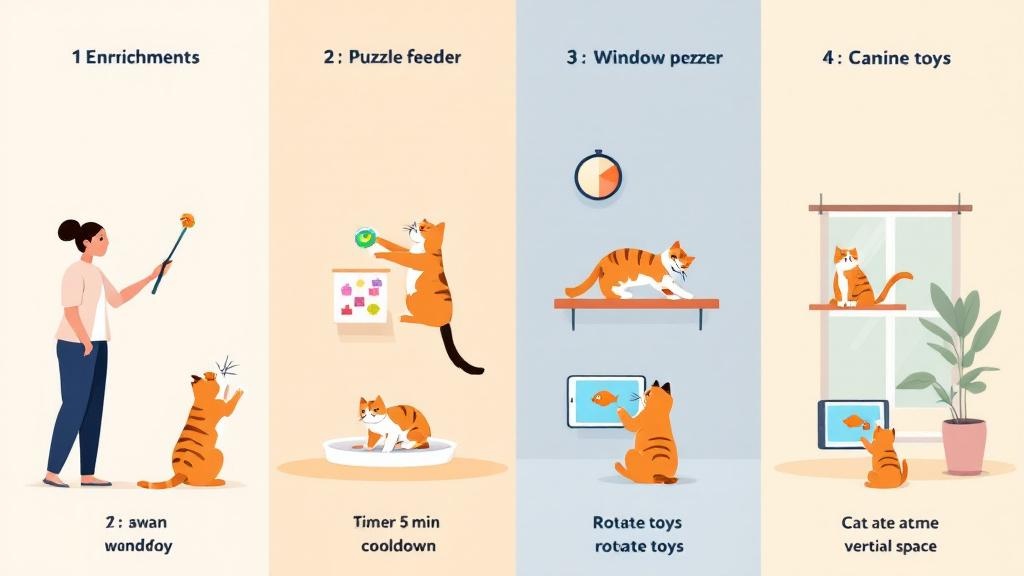
Each modality solves a different piece of the enrichment puzzle. Interactive play (wand toys, chase games with you) is the gold standard for relationship building and controlled “prey completion”—you can slow down, change direction, and let your cat catch. Solo puzzle feeders and treat balls shine when you’re busy: they stretch foraging time, reduce scarf-and-barf, and add daily mental work. Environmental enrichment (cat trees, shelves, scent trails, cardboard “caves,” bird-safe window viewing) raises baseline wellbeing for multi-cat homes by increasing space and reducing conflict.
Screen-based prey games are the most debated. They can be excellent for short bursts—especially for indoor cats—because they trigger visual tracking and quick pounces. Concerns are real: some cats get overstimulated, some lose interest fast, and screens can’t fully replace tactile capture. The fix is structure and safety: keep sessions 3–10 minutes, end on a calm note, and add a “cooldown” routine (treat scatter, lick mat, or wand toy for a final catch). A cat-first mobilegaming approach—timers, auto-pause, and simple analytics—helps owners turn novelty into repeatable cat enrichment habits instead of endless, frantic swiping.
3) A practical decision tree (kittens, seniors, high-drive cats) + building a sustainable routine
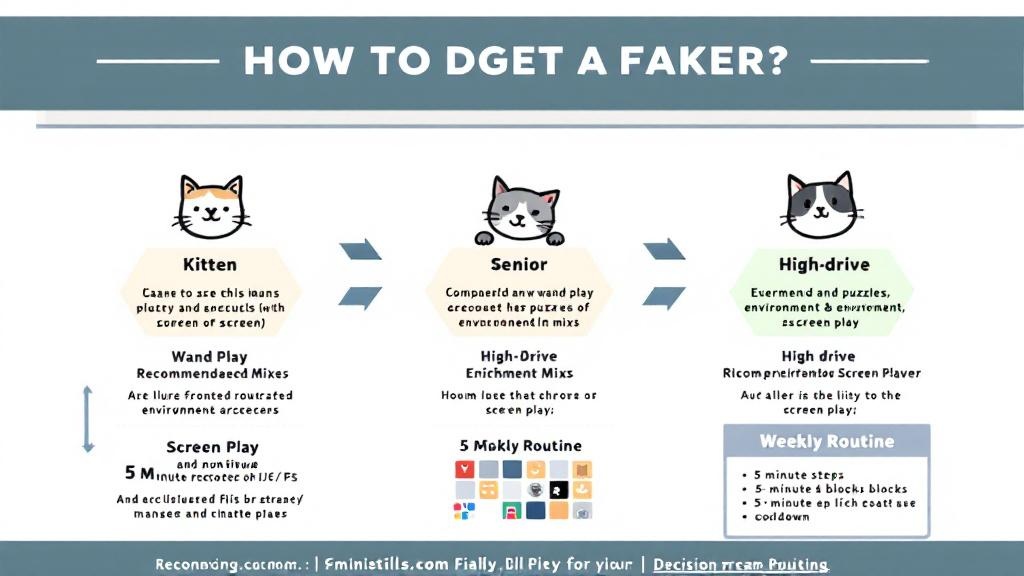
Use this quick decision tree to choose the right mix. Kittens (high energy, short attention): prioritize frequent micro-sessions—2–5 minutes of interactive play, then a tiny food reward. Rotate puzzles for variety, and keep screen play brief so arousal doesn’t spike. Seniors (lower stamina, joints): favor gentle wand work close to the ground, slow puzzles, and environmental comfort (warm beds, easy ramps). Screen prey can be useful if movement is adjustable and sessions stay short.
High-drive cats (intense chasers, easily frustrated): schedule predictable outlets—two daily sessions with clear endings. Start with wand play to ensure “capture,” then optionally add 3–5 minutes of screen-based prey as a sprint, followed by a cooldown (snuffle mat, treat scatter, or calm petting if they enjoy it). Multi-cat households benefit from individual pacing: one cat may need speed and challenge while another needs slower targets and more breaks.
The goal is consistency, not perfection. A subscription-style routine builder with lightweight personalization and analytics (preferred prey type, best time-of-day) can translate behavior guidance into an easy plan: “5 minutes before meetings,” “7pm reminder,” and “done for now” guardrails. That’s where pettech can make enrichment feel doable—and where cats feel better, day after day.